Overview
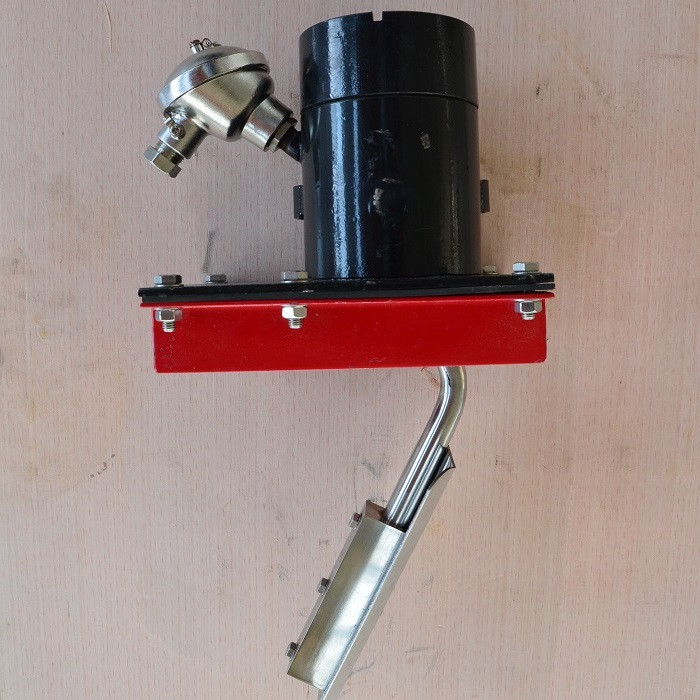
The CL-LL11 measures relative changes in drilling-fluid outlet flow. Flowing mud deflects a paddle, and the resulting angular movement is converted into an electrical signal for the mud logging acquisition system.
The sensor separates its mechanical transmission components from the electrical section. Stainless-steel structural parts and sealed electrical components are intended to improve corrosion resistance, durability and wellsite serviceability.
Specifications
Power supply: 24 V DC.
Output signal: 4-20 mA.
Operating temperature: -55 to 100 °C.
Paddle opening angle: 0-45°.
Measurement range: 0-100% relative change; no absolute flow calibration.
Measurement accuracy: ±2% FS.
Overall dimensions: 380 × 250 × 170 mm.
Measurement principle
Outlet flow pushes the paddle and rotates the bent arm and shaft. A geared mechanism transfers this movement to a conductive-plastic potentiometer. The change in resistance represents the relative change in mud flow and is converted to a 4-20 mA signal.
The paddle can be installed in four configurations by reversing its orientation and selecting the appropriate arm position, allowing adaptation to different outlet geometries and flow conditions.
Installation and maintenance
Mount the fixing frame securely at the mud-pit outlet. Confirm that the paddle moves freely and cannot strike the channel or accumulated solids. Remove adhered drilling fluid promptly to maintain reliable movement.
Route and protect the cable so that it does not obstruct wellsite work or suffer impact damage. Reliably connect the external grounding terminal. A compatible safety barrier is required when the sensor is installed in a hazardous location.
The zero and full-scale controls are located inside the explosion-protected junction box. Adjustment should be performed only by qualified personnel under safe conditions.
Quotation check: legacy specifications may be incomplete or outdated. Confirm operating range, output signal, materials, hazardous-area requirement, documentation, and certification for the current order.