Overview
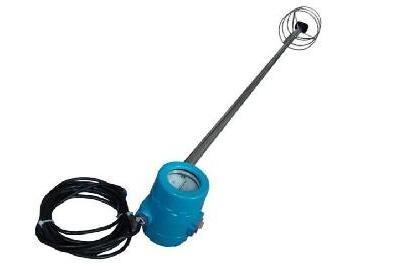
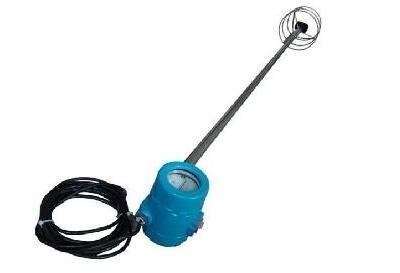
The CL-DD11 is an electromagnetic induction conductivity sensor designed to measure the conductivity of drilling fluid in a mud logging system. Its non-contact inductive measuring principle supports stable operation in conductive, corrosive drilling-fluid applications.
The sensor combines a transmitter and an immersion probe. A protective cover around the probe helps reduce accidental mechanical damage during wellsite use.
Specifications
Power supply: 5-30 V DC; 24 V DC recommended.
Measurement range: 0-300 mS/cm; configurable for the application.
Output signal: 4-20 mA DC.
Measurement accuracy: ±2% FS.
Repeatability: ±0.25%.
Operating temperature: -20 to 60 °C.
Relative humidity: 0-95% RH.
Measurement principle
The probe contains concentric transmitter and receiver coils. The transmitter coil generates an 8 kHz electromagnetic field while the probe is immersed in drilling fluid. Conductivity-dependent current in the fluid induces a corresponding signal in the receiver coil.
The transmitter conditions and amplifies the received signal, then produces a standard 4-20 mA DC output. An integrated thermistor monitors drilling-fluid temperature and compensates the conductivity reading to a reference temperature of 25 °C.
Installation and maintenance
Install the probe so that its active measuring area remains immersed in the drilling fluid and protected from impact. Keep foreign material out of the probe guard.
Clean the probe promptly when drilling-fluid deposits accumulate. Regular cleaning helps preserve measurement stability and accuracy.
Quotation check: legacy specifications may be incomplete or outdated. Confirm operating range, output signal, materials, hazardous-area requirement, documentation, and certification for the current order.